

Field reference: a control position with LED systems. It illustrates signal and display context, not a specific batch test result.

Technical reference: a receiving-card interface. Use it only when the actual hardware and configuration match the approved test method.
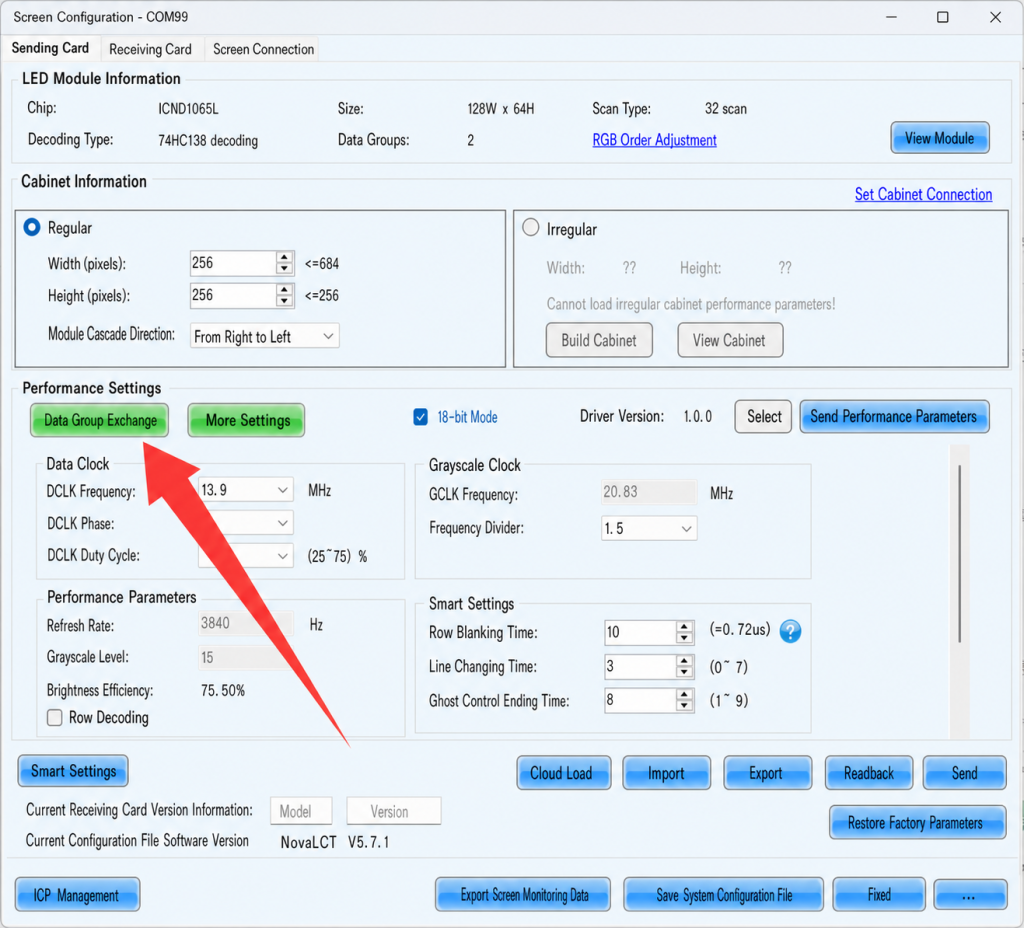
Technical reference: a configuration screen. It explains why mapping and data settings require controlled confirmation, not assumption.
A cabinet photograph can show the outside of an LED display, but it cannot answer every functional question. A module, power supply, receiving card, signal path, or configuration issue may appear only after the system is energised. Power-on Diagnosis is the third Product Quality SOP gate because it moves the evidence from physical condition to powered behaviour. It should be controlled, traceable, and recorded by physical cabinet.
Safety comes first. Power-on work should be performed by qualified personnel following the approved electrical and manufacturer procedures. Before any physical intervention, connection change, module handling, or component replacement, isolate power fully and verify the safe state. A test image is never a reason to bypass a power boundary. The quality record should show the result of a controlled process, not the risk of an improvised connection.
The first technical requirement is a known signal path. The team needs to understand what source, sending equipment, receiving path, and display configuration are being used for the test. If the control path changes while the result is being interpreted, a fault in the source can be confused with a fault in the cabinet. A controlled path makes the observation more repeatable. The exact controller or software depends on the product and approved internal method; the public explanation should not imply that every batch uses one universal system.
The second requirement is cabinet identity. Each tested cabinet or defined group should be connected to the tracking reference established at Receiving. Record the cabinet position, label, or other approved identifier so that a visible issue can return to the same physical unit. A photograph of a powered wall is not enough if the team cannot tell which cabinet shows the fault. Cabinet-level identity turns the test from a general impression into evidence that can support repair and re-test.
The test should use relevant content and patterns. Depending on the approved method, the team may review signal presence, image continuity, colour fields, brightness behaviour, grayscale, refresh-related appearance, or other screen functions. The test should be appropriate to the actual product and application. The public article should explain the categories of observation without inventing a threshold that has not been approved. What matters is that the team can see, record, and compare the result.
Signal, colour, and brightness are related but not identical. A cabinet may receive a signal while a module or data group behaves incorrectly. A screen may show an image while colour order or mapping produces an abnormal result. A brightness difference may be caused by configuration, power, module behaviour, or the test content itself. The technician should avoid jumping to a conclusion from one symptom. Record the symptom, isolate the relevant variable under the approved procedure, and identify what needs further diagnosis.
Configuration review can be especially important when a replacement cabinet or used batch is being matched to an existing system. Receiving-card mapping, module parameters, data groups, scan settings, and connection order can influence the displayed result. Technical interface images can help the customer understand why a configuration record matters. They do not, by themselves, prove that the current cabinet uses the same parameters. The actual batch and the actual test configuration must control the conclusion.
Power-on diagnosis is also a useful place to distinguish system faults from cabinet faults. If the complete wall fails, the source, sending card, network path, power distribution, or mapping may be involved. If one cabinet behaves differently while the rest of the controlled path is stable, the cabinet or its local components may deserve closer attention. The team should change one relevant variable at a time when the approved process allows it. Otherwise, several changes can make the original cause impossible to identify.
The record should capture both positive and negative observations. A cabinet that displays the test content as expected should have that result recorded. A cabinet with a visible fault should have the symptom, location, test condition, and next action recorded. “Pass” or “fail” alone is not always enough for a used-equipment evidence chain. A short note and a clear photograph can make the later repair and re-test much more efficient.
The output of Q03 is a fault list, power-on image set, and configuration check record. These records should stay connected to the same batch. If a fault is found, the cabinet should move to the approved repair status rather than being counted as released. If the result is stable under the test method, it can move to the next gate or the next approved observation. The status should reflect what was actually tested.
For international customers, this gate explains why a generic product photograph should not be treated as functional proof. The customer needs to know that the display was powered through a controlled route and that observations were tied to the physical cabinet. That is a more credible basis for discussion than a bright stage image alone. It also sets realistic expectations: a powered test is a moment of evidence, not a universal promise about every future site condition.
Q03 does not hide uncertainty. If a symptom needs component-level diagnosis, if a controller setting is unclear, or if a cabinet cannot be safely tested yet, the record should say so. A visible pending status lets the repair team act deliberately and lets the customer understand why the batch has not moved directly to release.
Power-on Diagnosis is where “looks intact” becomes “behaviour was observed under a controlled test.” That difference matters. By protecting safety, preserving cabinet identity, controlling the signal path, recording the image and configuration result, and sending faults to documented repair and re-test, Q03 turns a short test into a useful part of the product story.
